In this guide
People often search for a methylation test after reading about fatigue, brain fog, mood changes, MTHFR, methylated vitamins, or high homocysteine. That can make a genetic report sound like a shortcut to finding a vitamin deficiency. The test categories are related, but they answer different questions.
Why methylation tests and vitamin tests are easy to confuse
Methylation pathways use nutrients, including folate and vitamin B12, as part of normal biochemical reactions. Genes provide instructions for proteins involved in those pathways. Because nutrients and genes appear in the same biological system, marketing language sometimes blurs the line between inherited potential and current nutrient status.
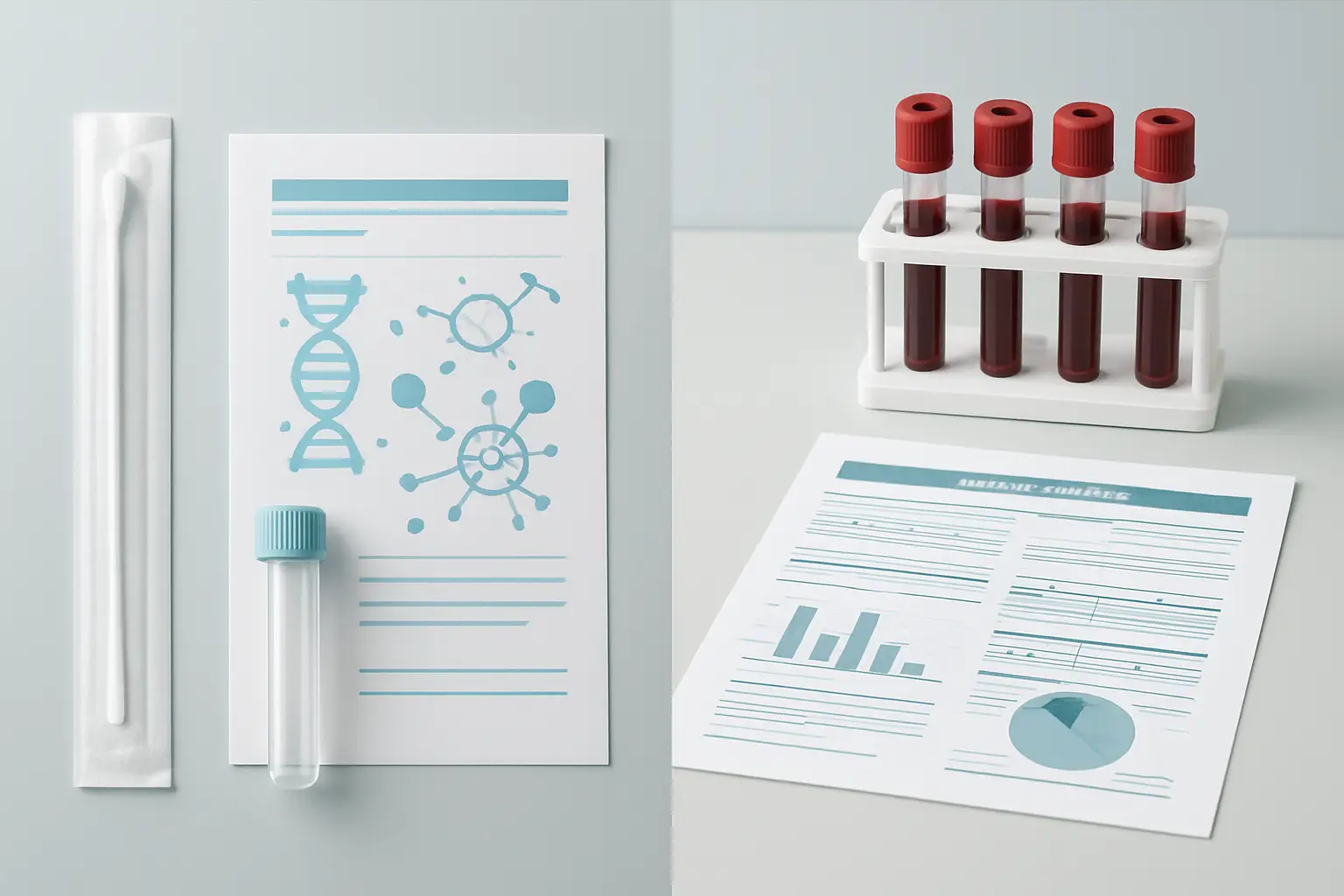
A genetic test reads selected DNA variants. A nutrient test measures a substance or related marker in a current biological sample, commonly blood. One provides inherited context; the other provides a time-specific measurement.
A useful rule
Genes can influence a pathway, but they do not tell you what you ate, absorbed, stored, or used today. Diet, supplements, medications, digestive conditions, kidney function, age, pregnancy, and other factors may affect current nutrient results.
What a genetic methylation report may show
The exact content depends on the product. A focused report may include one or two variants, while a broader report may include several genes connected to folate metabolism, methyl-group transfer, homocysteine pathways, choline metabolism, or related processes.
A report may help you:
- Identify which inherited variants were included in the analysis.
- Understand the general biological role of genes such as MTHFR, MTR, MTRR, COMT, BHMT, or PEMT.
- Prepare more specific questions for a physician, registered dietitian, pharmacist, or genetic counselor.
- Decide whether a current laboratory test or clinical review would answer the question more directly.
Before ordering, review what a genetic methylation test is and examine what the report says about included genes, variants, evidence limits, and interpretation. The report should clearly name the genes, variants, evidence limits, and type of interpretation being provided.
What a genetic methylation test cannot establish
A consumer genetic report does not directly establish:
- Your current blood folate or vitamin B12 concentration.
- Whether you have iron-deficiency anemia.
- Your present vitamin D level.
- Whether zinc intake or absorption is adequate.
- The cause of fatigue, tingling, mood changes, digestive symptoms, or other health concerns.
- The correct supplement form or dosage for you.
Direct-to-consumer genetic tests are generally informational. They usually do not provide a yes-or-no diagnosis, and their results need to be interpreted within a much larger clinical picture.
MTHFR does not equal folate deficiency
Common MTHFR variants can influence enzyme activity, but they do not prove that a person is folate deficient. The U.S. Centers for Disease Control and Prevention states that people with common MTHFR variants can process folic acid and that folic-acid intake has a greater effect on blood folate than genotype.