What genetic testing examines
It reviews inherited DNA variants that may be discussed in pathways involving folate metabolism, the methionine cycle and other connected biological processes.

Learn how DNA methylation testing works, where genes such as MTHFR, COMT, MTR and MTRR fit into related pathways, and how to read genetic results without treating a single variant as the whole story.
This learning hub brings together the core Methylation.us educational resources for people comparing at-home genetic testing in the USA, researching methylation-related genes, or trying to understand a report they already have.

In consumer genetic testing, a methylation-focused test can examine inherited DNA variants in genes associated with methylation and related one-carbon metabolism pathways. Understanding those variants can provide genetic context, but they should not be treated as a direct measurement of your current nutrient status or as a medical diagnosis.
It reviews inherited DNA variants that may be discussed in pathways involving folate metabolism, the methionine cycle and other connected biological processes.
A genetic variant report does not directly measure your current folate, vitamin B12, homocysteine or overall methylation activity.
Looking across related genes can provide more useful context than assuming that one MTHFR or other single-gene result explains your health.
Quick answer: DNA methylation testing can help you explore inherited genetic variants associated with methylation-related pathways. Results are best used as educational genetic context rather than as a diagnosis, nutrient test or stand-alone treatment plan.
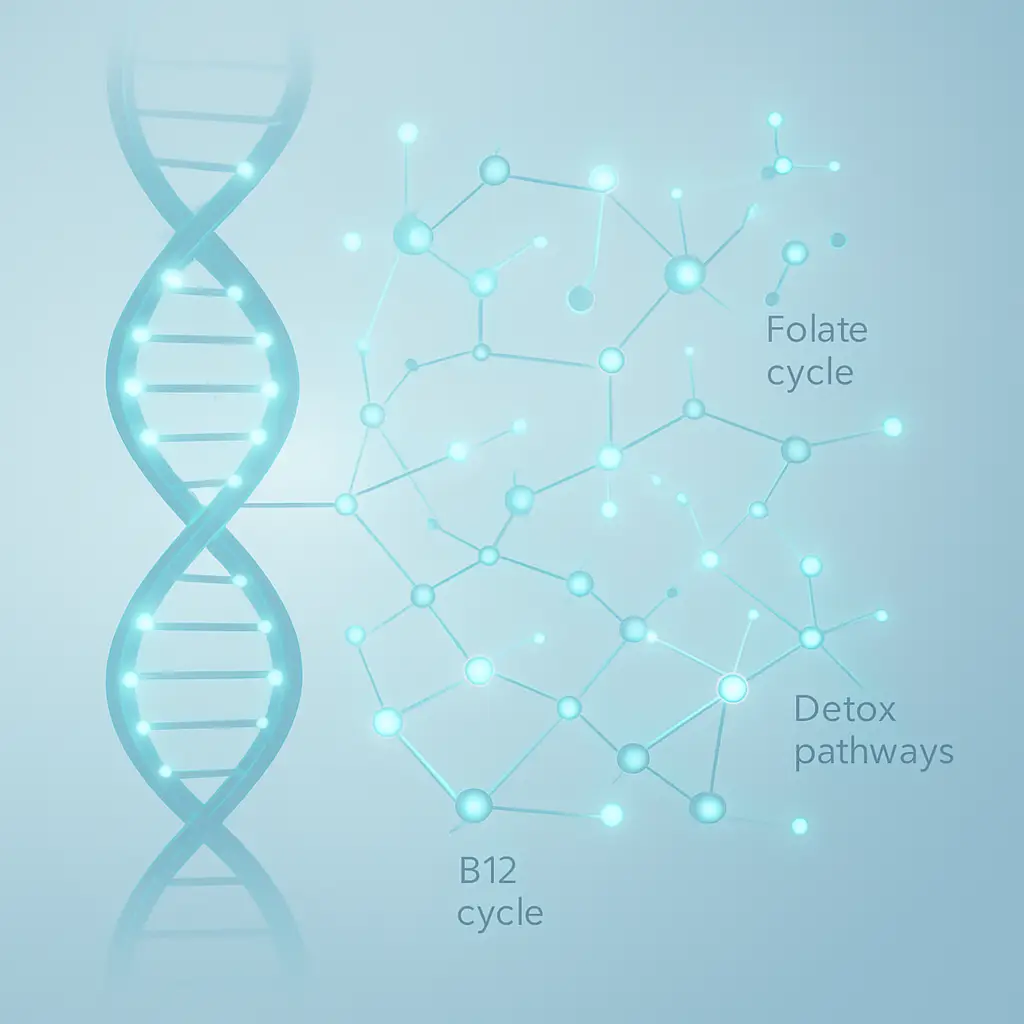
MTHFR is one of the best-known genes in methylation conversations, but it works within a larger network. Learning how genes and pathways connect can make test results easier to understand and reduce the temptation to interpret one SNP in isolation.
Use the gene library to understand what individual genes do, where they appear in broader pathways and why a gene result should be interpreted alongside other relevant findings.
Learn how MTHFR is connected with folate metabolism and why it receives so much attention in methylation testing.
Learn about MTHFRExplore the role of COMT within broader genetic pathway discussions and understand why context matters.
Learn about COMTLearn where MTR fits within the methionine cycle and its relationship with folate- and B12-associated pathways.
Learn about MTRExplore MTRR in the context of B12-related processes and connected methylation pathway interpretation.
Learn about MTRRUnderstanding the testing process before ordering can help you distinguish the physical sample collection from the genetic interpretation that comes later.
Test names can sound similar even when the scope, genes and report experience are different. A useful comparison starts with what you actually want to learn rather than choosing a test based on one familiar gene name.

Genetic reports can add useful context, but genetics is only one part of a much larger health picture. The most responsible interpretation separates inherited DNA information from current laboratory measurements, symptoms and clinical diagnosis.
A single MTHFR, COMT or other variant should not automatically be treated as the explanation for a symptom, nutrient need or health outcome.
Genetic findings are different from blood tests and other clinical measurements used to evaluate current nutrient or biochemical status.
Medical history, medications, symptoms, lifestyle and appropriate laboratory testing may all matter when making health or treatment decisions.
If you are researching DNA methylation testing from the United States, use this education hub to understand the test before comparing products. Availability, shipping and collection requirements should be reviewed for your location before ordering.
The goal is to know what the test examines, what the report can tell you and what it cannot tell you before you make a purchase decision.
You do not need to read every page in order. Choose the learning path that matches the question you are trying to answer now.
Explore educational articles covering genes, pathways, methylation concepts and common testing questions.
Visit the BlogFind practical help related to testing, sample collection, reports and the next step in your testing journey.
Get SupportReview resources intended for healthcare professionals who want to understand testing and genetic report context.
For CliniciansStart with these concise answers, then use the linked guides when you need more detail.
A methylation-focused genetic test can identify inherited DNA variants in genes associated with methylation and related pathways. The exact information depends on the test and report being used.
No. MTHFR is commonly discussed, but genes such as COMT, MTR, MTRR and others may also appear in broader methylation-related genetic analysis.
No. An inherited genetic variant test is not the same as a laboratory measurement of current folate, vitamin B12, homocysteine or other nutrient levels.
At-home testing options can use an oral-swab collection kit that is completed at home and returned according to the laboratory instructions supplied with the test.
It depends on what you want to learn. An MTHFR-focused test concentrates on a narrower question, while a broader panel can provide additional gene and pathway context.
Genetic wellness results should not be treated as a medical diagnosis. Health decisions may require medical history, symptoms and appropriate clinical testing.
Use what you have learned to compare testing scope, review a sample report and choose the option that best matches the genetic information you want to explore.