MTHFR: Folate Metabolism
Provides instructions for an enzyme that converts folate into 5-MTHF, an active form that participates in the methylation cycle.
Genetic variants like C677T and A1298C can affect enzyme activity to varying degrees.

When people think about heart and brain health, they often focus on cholesterol, blood pressure, or blood sugar. But another important biomarker deserves attention: homocysteine.
Homocysteine is an amino acid naturally produced when the body processes methionine, a nutrient found in protein-rich foods. Your body normally recycles homocysteine through interconnected metabolic pathways—a process that depends on nutrients such as folate and vitamin B12, as well as enzymes influenced by several genes.
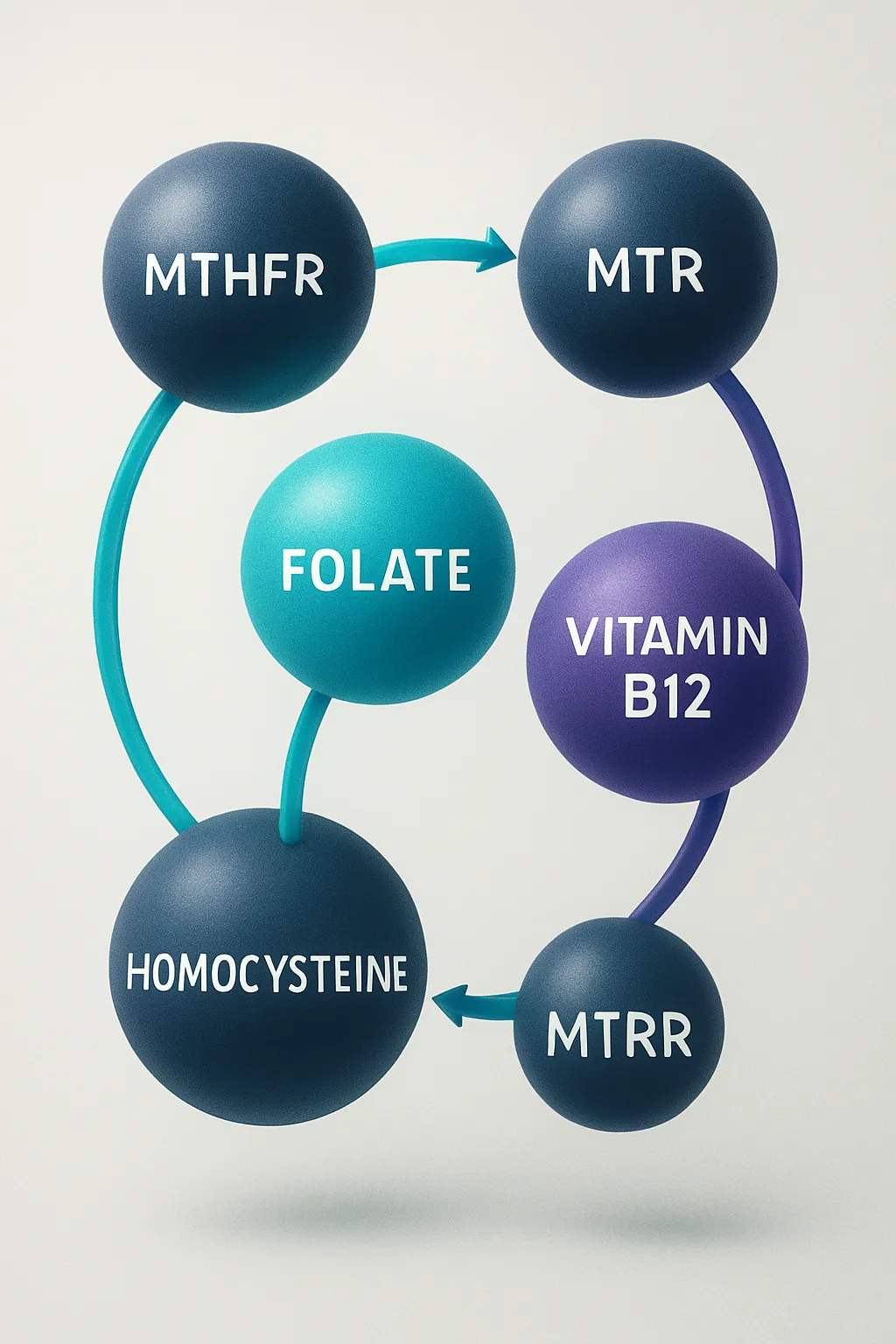
Your body has several pathways for processing homocysteine. One important route is remethylation, which converts homocysteine back into methionine. Another pathway, called transsulfuration, helps convert homocysteine into other compounds, including cysteine.
Provides instructions for an enzyme that converts folate into 5-MTHF, an active form that participates in the methylation cycle.
Genetic variants like C677T and A1298C can affect enzyme activity to varying degrees.
Provides instructions for methionine synthase, an enzyme that relies on vitamin B12 to convert homocysteine back into methionine.
Keeps homocysteine moving through normal metabolic routes.
Helps maintain and reactivate the MTR enzyme so that it can continually perform its essential role in the pathway.
Works in tandem with MTHFR and MTR.
Synergistic Genetics: Because MTHFR, MTR, and MTRR participate in connected processes, examining multiple genes can provide significantly more context than looking at a single genetic variant alone.
Genetic variants do not automatically mean that someone will develop high homocysteine or experience specific symptoms. However, certain variants can influence enzyme activity and may affect how efficiently particular metabolic reactions occur.
If homocysteine processing is affected, blood levels may rise. Persistently elevated homocysteine has been associated with cardiovascular and neurological health risks, although the relationship is complex and influenced by many other factors.
Genetics are only one piece of the puzzle. Everyday habits can also support healthy nutrient status and normal homocysteine metabolism.
Include foods naturally rich in folate, such as spinach and leafy greens, broccoli, beans and lentils, avocado, asparagus, and citrus fruits. A varied diet provides necessary metabolic vitamins.
Folate, B12, and B6 participate directly in homocysteine metabolism. Key sources include legumes, eggs, fish, meat, dairy, and fortified foods. Discuss supplementation forms with a healthcare professional.
Regular physical activity, adequate sleep, avoiding tobacco, moderating alcohol intake, and maintaining a balanced diet support overall cardiovascular and metabolic health.
4. Consider Testing When Appropriate: If you are interested in understanding how your genetics may relate to folate metabolism, a folate metabolism gene panel can provide information about relevant inherited variants. Genetic information can be considered alongside laboratory results and lifestyle factors to create a more complete picture.
Homocysteine is more than a single number on a laboratory report. It sits within a complex network involving folate, B vitamins, methylation, and multiple enzymes.
A broader Genetic Methylation Test in US can help you explore inherited variations across methylation-related pathways.
Understanding your genetic background can be a useful starting point for informed conversations about nutrition and wellness—but genetic results should always be interpreted in context.
Gain valuable genetic context regarding your homocysteine recycling pathways, MTHFR variants, and overall B-vitamin metabolic efficiency with a convenient at-home DNA kit.